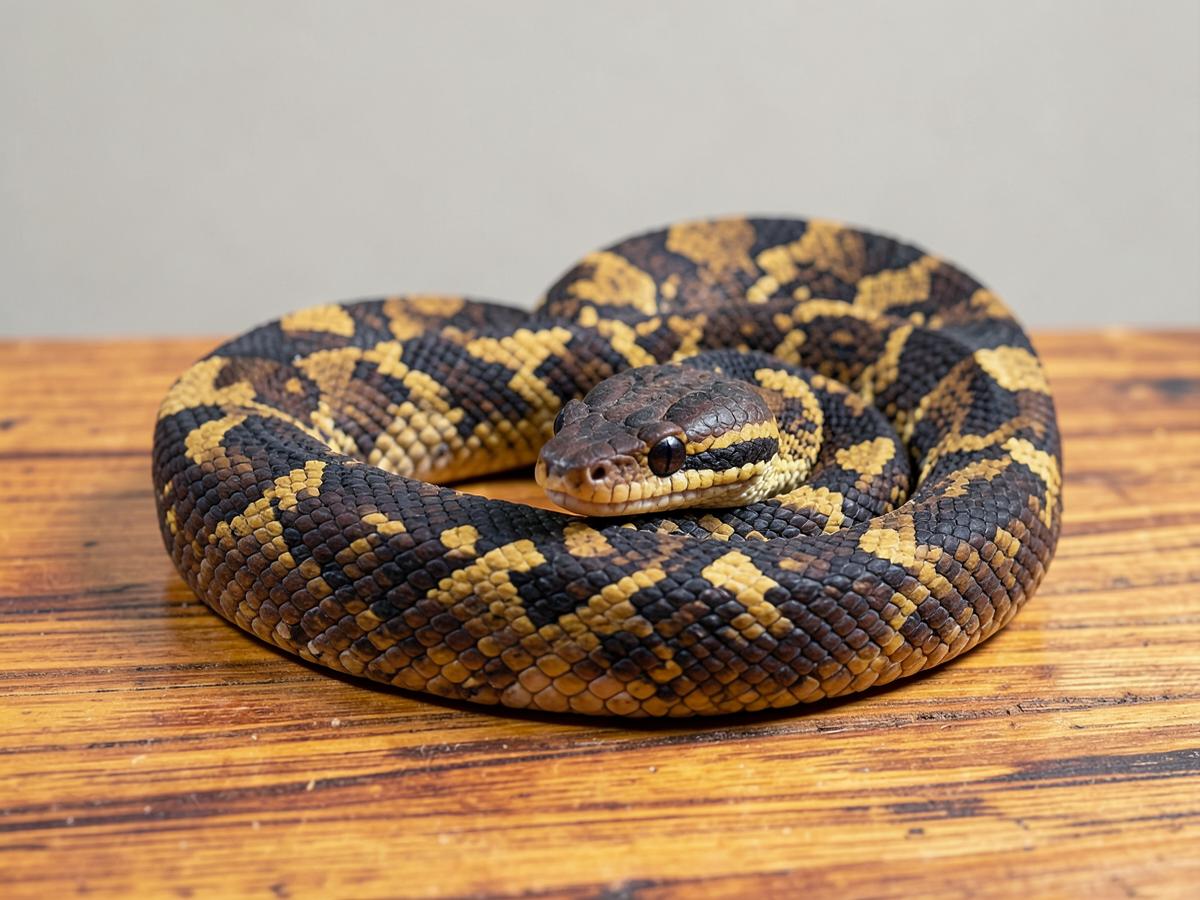
The ball python (Python regius) is the most widely kept snake in the world: modest in size, calm in temperament and available in hundreds of documented morphs.
Captive-bred ball pythons are listed by genetics. A listing should state visual morphs, confirmed hets and possible hets with their percentage odds, along with hatch date, current weight and feeding history. Avoid pairings known to produce neurological or lethal outcomes, such as super spider or the champagne-to-champagne combination.
Temperament
Docile and slow-moving, tolerant of routine handling once feeding is established. Nocturnal and prone to hiding, which is normal, not sickness.
Grooming
Not applicable, but husbandry is: maintain 88–92°F basking and 78–80°F ambient, 55–65% humidity rising to 70% in shed, with two tight hides.
Health considerations
Check for a clean shed history, no respiratory clicking or wheeze, a firm body, and a documented feeding response on frozen-thawed prey.
Is a Ball Python right for you?
A strong first snake for keepers who can commit to two to three decades and provide correct thermal gradients.
Ball Python FAQs
What does 'het' mean on a ball python listing?
Het is short for heterozygous — the animal carries one copy of a recessive gene without showing it. '100% het' is genetically proven, while '66% possible het' means there is a two-in-three statistical chance based on the pairing.
How often do ball pythons eat?
Hatchlings usually eat every 5–7 days and adults every 10–14 days. Seasonal fasting in mature animals is common and not automatically a problem if weight holds.