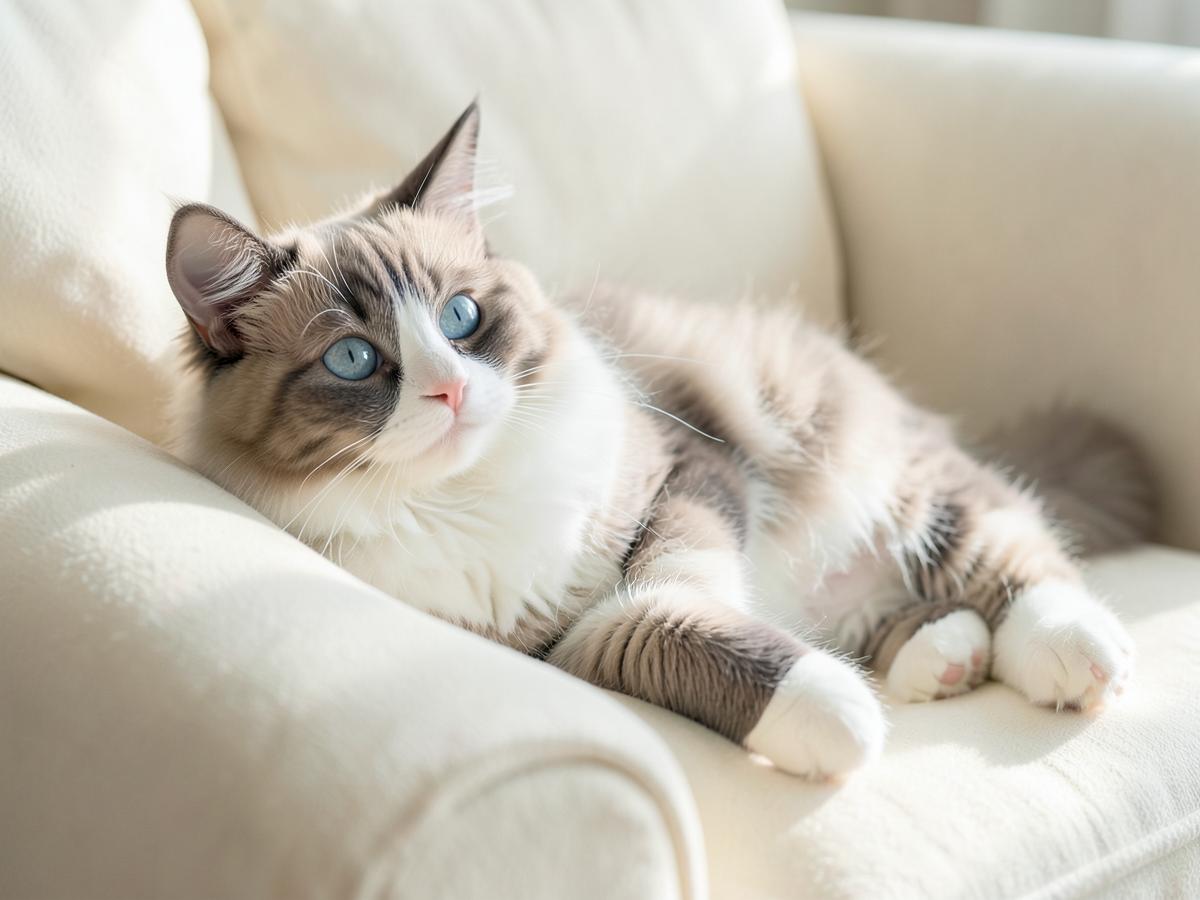
Large, docile and famously floppy when handled, the Ragdoll is a pointed, blue-eyed breed developed in California in the 1960s and now one of the most-searched pedigree cats in the world.
Ragdolls are a pointed breed: colour is restricted to the extremities and every kitten is born white. Recognised base colours are seal, blue, chocolate, lilac, red (flame) and cream, expressed in colorpoint, mitted or bicolor patterns and optionally with lynx (tabby) or tortie overlays — giving combinations such as seal lynx bicolor or blue tortie mitted.
Temperament
Placid, humane and dog-like. Ragdolls follow their people from room to room, tolerate handling well and are rarely climbers. They are indoor cats and do best in pairs or with a household that is home often.
Grooming
Semi-long single coat with little undercoat, so matting is less severe than in a Persian. Comb twice weekly, daily during seasonal moult, with attention to the britches and armpits.
Health considerations
Both parents should be DNA tested for the Ragdoll HCM mutation (MYBPC3 R820W) and screened by echocardiogram, plus PKD and FeLV/FIV negative status. Ask for the certificates, not a verbal assurance.
Is a Ragdoll right for you?
Ideal for indoor homes, families with considerate children and multi-pet households. Not for owners wanting an independent cat that is content alone all day.
Ragdoll FAQs
What Ragdoll colours and patterns are there?
Six base colours — seal, blue, chocolate, lilac, red/flame and cream — combine with colorpoint, mitted or bicolor patterns, and can carry lynx or tortie modifiers, producing combinations like blue lynx bicolor or seal tortie mitted (torbie).
When should I spay or neuter a Ragdoll?
Most breeders desex kittens before they go home or contractually require it by around six months. Ragdolls mature slowly, so discuss timing with your vet, and note that reputable breeders will not sell an intact pet kitten without a breeding agreement.
Do Ragdolls really go limp when you pick them up?
Many do relax noticeably when held, which is where the name comes from, but it varies by individual and is not a guarantee of any particular kitten.
A day-by-day plan for a Ragdoll kitten's first week home, covering confinement, litter setup, feeding transitions and the behaviour that is normal versus concerning.
How much to feed a Ragdoll kitten and adult, why the breed's four-year maturity changes portioning, and how to avoid the obesity that shortens large-cat lifespans.
Current veterinary guidance on spay and neuter timing for cats, including paediatric desexing, the five-month consensus and what breeder contracts usually require.